Saturday, 18 July 2026

Activist Sonam Wangchuk Hospitalised on Day 21 of Hunger Strike Over NEET Row

Activist Sonam Wangchuk Hospitalised on Day 21 of Hunger Strike Over NEET Row

New Delhi — Climate activist and educator Sonam Wangchuk was shifted to Safdarjung Hospital by Delhi Police early Saturday morning, marking a dramatic escalation on the 21st day of his indefinite hunger strike at Jantar Mantar. Wangchuk has been protesting against alleged irregularities in national exams, particularly the NEET-UG paper leak controversy, and demanding the resignation of Union Education Minister Dharmendra Pradhan.

High Court Intervention and Police Action

The police action followed directions from the Delhi High Court. Responding to a Public Interest Litigation (PIL) regarding Wangchuk's worsening condition, the court emphasized that the "life of every citizen is precious" and ordered regular clinical monitoring and necessary medical intervention to save his life.

According to statements from the Delhi Police, Wangchuk was moved for "essential medical care" upon expert medical advice. While the authorities maintained that the operation was conducted safely, protesting members of the Cockroach Janta Party (CJP) — the satirical group spearheading the agitation — reported confusion and alleged that police forcefully removed Wangchuk from the stage amidst their objections.

Deteriorating Health Concerns

Medical bulletins had been raising alarms over the 59-year-old activist's health for several days. Doctors warned earlier in the week that his condition had reached an emergency phase with a genuine fear of organ failure. Wangchuk himself acknowledged in a video message on Friday that he had lost nearly 20% of his body weight (over 9.5 kg) since beginning his fast on June 28.

Following his hospitalization, Safdarjung Hospital released a health update stating that Wangchuk is "weak due to prolonged fasting and dehydration," but currently stable. He remains under continuous observation to restore his bodily parameters.

Wangchuk’s wife, Gitanjali J. Angmo, who is currently at the hospital, has stated firmly that no oral or intravenous treatment should be administered without explicit consent from her, her family, and the private doctors who monitored him throughout the fast.

What’s Next for the Protest?

Despite his hospitalization, the movement shows no signs of dissipating. Prior to being moved, Wangchuk urged his supporters to remain strong, declaring he would stay alive "at any cost" for the CJP's proposed peaceful march to Parliament on July 20 — the first day of the Monsoon Session.

Following the police crackdown, CJP founder Abhijeet Dipke was temporarily detained. After his release, Dipke addressed the remaining protesters at Jantar Mantar and announced his own indefinite hunger strike, reaffirming that the scheduled march to Parliament will proceed as planned.

Stay tuned for more updates as the situation develops.

Thursday, 16 July 2026

Argentina's Dramatic Late Comeback Stuns England in 2026 World Cup Semi-Final

Match Highlights: Argentina's Dramatic Late Comeback Stuns England in 2026 World Cup Semi-Final

Heartbreak for England, Glory for Argentina: 2026 World Cup Semi-Final Highlights

Final Score:
England 1 - 2 Argentina
Atlanta Stadium | July 15, 2026

In what will undoubtedly go down as one of the most thrilling matches of the 2026 FIFA World Cup, defending champions Argentina engineered a stunning late comeback to defeat England 2-1 and book their ticket to a second consecutive World Cup Final.

The Breakthrough: England Takes the Lead

After a tense and tightly contested first half that saw both teams feeling each other out, the deadlock was broken in the 55th minute. England struck first when a brilliant cross from Morgan Rogers found Anthony Gordon at the back post, and Gordon made no mistake, tapping it in to send the Three Lions' supporters into a frenzy. Following the goal, England manager Thomas Tuchel made a series of defensive substitutions, shifting to a back five in an attempt to protect their slender 1-0 lead.

The Turning Point: Messi's Magic Returns

With their tournament lives on the line and time running out, Argentina relentlessly pushed forward. In the 85th minute, the pressure finally cracked England's defensive shell. Lionel Messi provided a perfectly weighted pass to Enzo Fernández, who fired a magnificent strike from outside the box past Jordan Pickford to level the score at 1-1.

Key Stat: Lionel Messi provided both assists in the match, making him the driving force behind the comeback and putting him at the top of the tournament's Golden Boot standings with 8 goals and one more assist than Kylian Mbappé.

The Stoppage Time Stunner

Just as the match appeared destined for extra time, Argentina struck a fatal blow. In the 92nd minute of stoppage time, Messi delivered a precise cross into the box. Substitute striker Lautaro Martínez managed to steal in between the English defenders and head the ball into the back of the net. The 92nd-minute winner completed a remarkable seven-minute turnaround, leaving the English players devastated on the pitch.

What's Next?

  • For Argentina 🇦🇷: The defending champions will travel to New Jersey on Sunday to face Spain in the World Cup Final. It will be a historic clash, marking the first time the reigning Copa América champions face the reigning UEFA European champions in a World Cup Final.
  • For England 🏴󠁧󠁢󠁥󠁮󠁧󠁿: Another painful late-tournament exit. They will head to Miami to play France in the third-place play-off on Saturday.

Stay tuned for full coverage of the grand finale between Spain and Argentina as the greatest show on Earth comes to a close!

Jagannath Rath Yatra: The Soul of Puri, Odisha

A grand photograph of the Jagannath Rath Yatra in Puri, showing three massive chariots pulled by thousands of devotees with the Jagannath Temple in the background.

Every year, the coastal city of Puri in Odisha, India, transforms into a sea of devotion, color, and unparalleled energy. The occasion is the Jagannath Rath Yatra, one of the oldest and largest religious processions in the world. This spectacular festival, also known as the Chariot Festival, is not just a display of faith; it is a profound cultural phenomenon that encapsulates the essence of Odia heritage. For those wondering, "what is it, and why is it celebrated?" here is a guide to understanding the heart of this grand event.

What is the Jagannath Rath Yatra?

At its core, the Rath Yatra is a 12-day festival that culminates in a grand procession of three main deities from the historic Jagannath Temple: Lord Jagannath (a form of Lord Krishna/Vishnu), his elder brother Lord Balabhadra, and their younger sister Goddess Subhadra.

The defining feature of the festival is the construction and journey of three massive, new wooden chariots:

  • Nandighosa: The largest, dedicated to Lord Jagannath, featuring a red and yellow canopy.
  • Taladhwaja: The chariot of Lord Balabhadra, distinguished by a green and red canopy.
  • Darpadalana (or Devadalana): The smallest, carrying Goddess Subhadra, covered with a red and black canopy.

The deities are ceremoniously transferred from the temple sanctum to their respective chariots in a dynamic ritual called Pahandi. Then, with thousands of devotees pulling the colossal ropes, the chariots embark on a three-kilometer journey along the Bada Danda (Grand Road) to the Gundicha Temple, which is considered their aunt’s home. After a stay of nine days, they make their return journey, known as Bahuda Yatra.

Why is the Jagannath Rath Yatra Celebrated?

The Rath Yatra is steeped in both mythological significance and a beautiful philosophy of inclusive devotion. It is celebrated for several key reasons:

1. Mythology: A Divine Sibling Visit

The primary reason for the festival is rooted in a beloved legend from Hindu mythology. The Rath Yatra commemorates the annual journey of Lord Jagannath, Lord Balabhadra, and Goddess Subhadra to the Gundicha Temple. This temple is considered to be the home of their maternal aunt, Gundicha. The legend states that the Lord desires to visit his aunt and stay with her for a few days, making it a sacred, personal, and human-like sibling journey. The final destination, the Gundicha Temple, is where the main deities originated before being installed in the Jagannath Temple, making the journey a return to their birthplace.

2. Philosophy: Lord of the People, For the People

The Rath Yatra embodies a profound spiritual message: the Divine is accessible to all. In most traditional Hindu temples, non-Hindus and sometimes certain groups are restricted from entering the inner sanctum to see the deities. However, during Rath Yatra, the Lord comes out of his temple, breaks all barriers, and travels through the streets. This is called the Public Darshan, or divine view, allowing every individual, regardless of their caste, religion, or background, to catch a glimpse of the Lord, touch his chariot, and participate in the procession.

This message of equality is reinforced by a unique and symbolic ritual performed by the current Gajapati King of Puri. In the Chhera Pahanra, the king, considered the highest temporal authority, sweeps the platforms of all three chariots with a gold-handled broom before they begin their journey, demonstrating that everyone is a servant of the Lord.

3. Devotion: A Path to Salvation

For the millions who flock to Puri, participating in the Rath Yatra is a path to spiritual merit. It is widely believed that merely seeing the Lord on his chariot or helping to pull the ropes of the chariots can cleanse one of sins and lead to Moksha (salvation). The energy of the crowd, the synchronised chanting of "Jai Jagannath," and the sheer act of joint effort create an overwhelming sense of communal harmony and personal spiritual connection.

Conclusion

The Jagannath Rath Yatra of Puri is more than a festival; it is a living tradition that celebrates unity, humility, and the universal nature of divine love. Through its massive chariots and the story of a divine family visit, it offers a timeless reminder that the Lord belongs to everyone and will come out to meet those who call him with true devotion. It is a spectacle of faith that is as visually stunning as it is spiritually profound.

Wednesday, 15 July 2026

Spain Outclasses France 2-0 to Reach 2026 World Cup Final: Full Match Highlights

Spain Outclasses France 2-0 to Reach 2026 World Cup Final

The 2026 FIFA World Cup delivered another unforgettable night in Arlington, Texas, as Spain delivered a tactical masterclass to defeat France 2-0 in the semi-finals. With this victory, La Roja has officially booked their ticket to their first World Cup final in 16 years, leaving Kylian Mbappé and a star-studded French squad searching for answers.

If you missed the high-octane clash at the AT&T Stadium, here is the complete breakdown of how Spain dismantled the top-ranked team in the world.

The Breakthrough: Yamal's Hustle and Oyarzabal's Ice-Cold Penalty

The match began with France trying to implement a high press, but Spain’s midfield—anchored by an impeccable Rodri—quickly dictated the tempo. The breakthrough came in the 22nd minute, sparked by none other than teenage sensation Lamine Yamal.

Fresh off celebrating his 19th birthday, Yamal showcased relentless persistence chasing down a loose ball in the French box. His sharp movement caught veteran defender Lucas Digne completely off guard. Digne misjudged a clearance and brought the teenager down, leaving the referee no choice but to point to the penalty spot.

Mikel Oyarzabal stepped up and calmly sent French goalkeeper Mike Maignan the wrong way, netting his fifth goal of the tournament and giving Spain a crucial 1-0 lead.

The Dagger: Pedro Porro Seals the Deal

Going into the second half, France desperately needed a response. Manager Didier Deschamps urged his side forward, but Spain’s defensive organization was impenetrable. In the 58th minute, Spain put the game entirely out of reach.

Initiating a beautiful give-and-go sequence with Dani Olmo, Pedro Porro found himself in space and drove a thunderous, beautifully crafted shot past Maignan to make it 2-0. It was a sequence that perfectly encapsulated Spain’s modern evolution: maintaining their legendary possession control, but striking with lethal verticality.

A Tactical Masterclass: Shutting Down Mbappé

Perhaps the most impressive highlight of the night wasn't a goal at all, but a defensive clinic. France entered the match with a tournament-high 16 goals, boasting arguably the most terrifying attack in world football with Kylian Mbappé, Ousmane Dembélé, and Michael Olise.

Yet, Spain restricted Les Bleus to a mere three shots on target. By starving France of the ball and closing down the transition spaces, Spain forced Mbappé to drift aimlessly across the flanks in search of touches. Dembélé was forced deep into his own midfield, and Olise was eventually subbed off after a completely quiet evening.

Key Match Stats & Milestones

  • Unbeaten Streak: Spain has now extended their unbeaten run to 37 matches across all competitions, tying Italy's all-time European record.
  • Yamal's Golden Touch: Lamine Yamal now holds a flawless 12-0 winning record whenever he has been in Spain's starting XI across the World Cup and European Championships.
  • History Repeats: This marks the third consecutive summer Spain has eliminated France from a major tournament (following Euro 2024 and the 2025 Nations League).

What’s Next?

France will head to Miami Gardens this Saturday to compete in the third-place playoff, marking a disappointing end for a squad that had their eyes firmly on the trophy.

Meanwhile, Spain marches on to the grand finale at MetLife Stadium in New Jersey this Sunday. Playing at their absolute peak, La Roja looks more than ready to claim world football's ultimate prize.


Who do you think will take home the 2026 World Cup trophy? Drop your predictions in the comments below!

React: Prop Drilling

Understanding Prop Drilling in React: What It Is and Why It Hurts

Understanding Prop Drilling in React: What It Is and Why It Hurts

If you have been building apps in React for a while, you have probably run into a situation where you need to pass data from a top-level component all the way down to a deeply nested child component.

To get the data to its final destination, you have to pass it through every single component in between. In the React world, this process is affectionately (and sometimes frustratingly) known as Prop Drilling.

The Bucket Brigade Analogy

Imagine a line of firefighters passing a bucket of water to put out a fire. The people in the middle of the line don't actually use the water; their only job is to hold it for a second and pass it to the next person.

Prop drilling works exactly the same way. It is the process of passing down data via props through a chain of components that don't actually need the data themselves, just so it can reach the one component at the bottom that does.

Prop Drilling in Action

Let’s look at a realistic scenario. Imagine we have an App component that holds a logged-in user's name. We need to display that name inside a LastChild component, which is buried 4 levels deep.

Component Tree:
App → Layout → UserProfile → LastChild

Here is what the code looks like when we rely on prop drilling:


import React, { useState } from 'react';

// 1. The Top Level
export default function App() {
  const [userName, setUserName] = useState("Alice");

  return (
      <div className="app-container">
        <h1>Welcome to the App</h1>
        
        {/* We pass the data to the first child in the chain */}
        <Layout user={userName} /> 
      </div>
  );
}

// 2. Middleman #1
// Layout doesn't care about the user data, but it HAS to accept it to pass it down.
function Layout({ user }) {
  return (
    <div className="layout">
      <UserProfile user={user} />
    </div>
  );
}

// 3. Middleman #2
// UserProfile also doesn't use this data directly.
function UserProfile({ user }) {
  return (
    <div>
      <LastChild user={user} />
    </div>
  );
}

// 4. The Destination
// The data finally arrives at the component that actually needs it!
function LastChild({ user }) {
  return (
      <div>
      <p>Logged in as: {user}</p>
    </div>
  );
}


Why is Prop Drilling a Problem?

In our small 4-level example above, passing the user prop down isn't the end of the world. But in a real-world enterprise application, your component tree might be 15 or 20 levels deep.

If you rely on prop drilling in a large app, you run into three major headaches:

  • Cluttered Code: Your middleman components become bloated with props they don't even use.
  • Brittle Refactoring: If you ever need to rename the prop, or move the destination component, you have to manually update every single middleman component in the chain.
  • Increased Risk of Bugs: It is incredibly easy to make a typo (like passing userName but trying to receive user) somewhere in the middle of the chain, causing the data to suddenly become undefined.

How to Escape the Drill

React gives us an elegant, built-in escape hatch to avoid prop drilling entirely: the Context API (useContext).

Context acts like a global teleporter. You wrap your parent component in a Provider, put the data inside it, and then any component anywhere in the tree can magically teleport that data directly to itself, completely bypassing the middlemen.


Stay tuned for the next post, where we will refactor this exact code using useContext to make our components clean, modular, and middleman-free!

Tuesday, 14 July 2026

Demystifying Python Decorators: A Guide to Cleaner Code

Demystifying Python Decorators: A Guide to Cleaner Code

If you have been writing Python for a while, you have likely encountered the @ symbol above a function definition. Whether you are defining routes in Flask or restricting access to views in Django, decorators are everywhere. But how exactly do they work under the hood?

In this post, we are going to break down what decorators are, why they are essential for intermediate developers, and how you can build your own to keep your codebase DRY (Don't Repeat Yourself).

What is a Decorator?

At its core, a decorator is simply a function that takes another function as an argument, extends its behavior without explicitly modifying it, and returns a new function. This is possible because in Python, functions are first-class citizens. They can be passed around and used as arguments just like strings, integers, or objects.

The Classic Use Case: An Execution Timer

Let’s say you are optimizing a backend process and you want to measure how long a specific function takes to run. Instead of pasting the same timing logic into every single function, you can write a decorator.

1. Creating the Decorator


import time
from functools import wraps

def timer_decorator(func):
    @wraps(func)
    def wrapper(*args, **kwargs):
        start_time = time.time()
        result = func(*args, **kwargs)
        end_time = time.time()
        print(f"Function '{func.__name__}' executed in {end_time - start_time:.4f} seconds.")
        return result
    return wrapper


Let's break down the mechanics here:

  • func is the original function being passed in.
  • wrapper(*args, **kwargs) ensures that our decorator can accept any number of positional and keyword arguments, making it highly reusable.
  • @wraps(func) is a built-in tool from the functools library. It preserves the metadata of the original function, like its name and docstring, so you don't lose that information during debugging.

2. Applying the Decorator

Now, applying this to any function is as simple as adding the @timer_decorator tag.


@timer_decorator
def process_data():
    # Simulating a heavy data ingestion task
    time.sleep(2)
    return "Data processed successfully!"

process_data()
# Output: Function 'process_data' executed in 2.0021 seconds.


Why Should You Care?

Moving from a beginner to an intermediate Python developer involves writing code that is not just functional, but scalable. Decorators help you achieve this by separating your core business logic from utility tasks. Common real-world applications include:

  • Authentication and Authorization: Checking if a user is logged in before executing a view.
  • Logging: Automatically recording inputs, outputs, and errors for specific functions.
  • Caching: Storing the results of expensive function calls to speed up future requests.

Wrap Up

Decorators might look like magic at first glance, but once you understand that they are just functions returning functions, a whole new level of architectural design opens up to you. Start small by wrapping a few utility functions in your current project, and soon enough, reaching for decorators will become second nature.


Have you built any custom decorators that saved your team a massive amount of time? Share your examples in the comments below!

The Final Four: FIFA World Cup 2026

The Final Four: FIFA World Cup 2026™ Reaches the Semifinals!

The Final Four: FIFA World Cup 2026™ Reaches the Semifinals! 🏆

The 2026 FIFA World Cup in North America has delivered nonstop drama, incredible goals, and massive upsets. After an intense weekend of quarter-final action, the field of 48 has been whittled down to just four titans of world football: France, Spain, England, and Argentina.

Quarter-Final Recap ⏪

The quarter-finals provided some of the most thrilling matches of the tournament so far. Here is how the final four punched their tickets to the semis:

  • France 2 - 0 Morocco: The French side showcased a rock-solid defense to end Morocco's impressive run.
  • Spain 2 - 1 Belgium: Spain secured a hard-fought victory over the Belgians in Los Angeles.
  • England 2 - 1 Norway (AET): It took extra time, but Jude Bellingham's brilliance and a late winner helped the Three Lions edge past Erling Haaland's Norway.
  • Argentina 3 - 1 Switzerland (AET): Lionel Messi's squad faced a resilient Swiss defense but ultimately overpowered them in extra time to keep their title defense alive.

The Semifinal Showdowns ⚔️

We are guaranteed a spectacular finish to this historic tournament. Here is the upcoming schedule for the semifinals (All times are listed in Indian Standard Time - IST):

🇫🇷 France vs. Spain 🇪🇸

Venue: Dallas Stadium, Texas

Kickoff: Wednesday, July 15 at 12:30 AM (IST)

A battle of European heavyweights. France's attacking flair, led by Kylian Mbappé, goes head-to-head against Spain's masterful possession game.

🏴󠁧󠁢󠁥󠁮󠁧󠁿 England vs. Argentina 🇦🇷

Venue: Atlanta Stadium, Georgia

Kickoff: Thursday, July 16 at 12:30 AM (IST)

A historic rivalry renewed! Jude Bellingham has been in sensational form for England, but they will have to go through the defending champions, Argentina, to reach the final.

What's Next?

The losers of the semifinals will face off in the Third-Place match on July 19 (IST) in Miami. Meanwhile, the winners will head to the New York New Jersey Stadium for the ultimate prize—the World Cup Final—on July 20 (IST)!

Who do you think will lift the trophy this year? Let us know in the comments below! 👇

Monday, 13 July 2026

React 18 Automatic Batching: A Senior Developer Brain Teaser

The React 18 Batching Brain Teaser That Stumps Seniors

The React 18 Brain Teaser That Stumps Seniors

If you have been writing React for more than a few years, your brain is likely hardwired to expect certain behaviors from the rendering engine. But React 18 introduced a massive fundamental change under the hood that quietly broke how many of us model state updates in our heads.

Let’s test your knowledge of modern React rendering mechanics. Assuming this app is running in standard production mode (no StrictMode double-invocations), take a look at the component below.

The Challenge

When the component mounts, and the user clicks the "Trigger" button exactly once, what will be logged to the console from start to finish?

import { useState, useRef } from 'react';

export default function App() {
  const [count, setCount] = useState(0);
  const renders = useRef(0);
  
  renders.current++;
  console.log(`Render ${renders.current}: ${count}`);

  const handleClick = () => {
    // First batch
    setCount(c => c + 1);
    setCount(c => c + 1);
    
    // Second batch
    setTimeout(() => {
      setCount(c => c + 1);
      setCount(c => c + 1);
    }, 0);
  };

  return <button onClick={handleClick}>Trigger</button>;
}

Trace the state updates and the Event Loop in your head. Do you have your answer? Drop your guess in the comments below before you expand the solution!

Click here to reveal the output and explanation

The Correct Output:

Render 1: 0
Render 2: 2
Render 3: 4

Why does this happen?

If you guessed Render 3: 3 and Render 4: 4 at the end, you are thinking in React 17!

Here is exactly how the React 18 rendering engine processes this:

  • Render 1 (Mount): The component mounts, renders.current becomes 1, and count is 0.
  • The Click (Synchronous): React has always batched state updates inside standard React event handlers. The first two setCount calls are bundled together. React waits for the synchronous code to finish, applies both increments, and triggers exactly one render. (Logs Render 2: 2).
  • The Timeout (Asynchronous): In React 17, state updates inside promises, timeouts, or native event handlers were not batched. They would trigger a re-render for every single setState call.
  • React 18 Automatic Batching: React 18 introduced Automatic Batching. Now, React batches state updates no matter where they happen. When the macro-task (the setTimeout) executes, React intelligently batches the two internal setCount calls together just like it did in the synchronous event handler. It waits for the callback to complete, applies both increments, and triggers just one final render. (Logs Render 3: 4).

Bonus tip: If you ever actually need the old React 17 behavior to force the DOM to paint between updates inside a timeout, you now have to explicitly wrap your state updates in flushSync() from react-dom.

Python Question: ID-PY28302

The Classic Python Bug: Do You Know Your Default Arguments?

The Classic Python Bug: Do You Know Your Default Arguments?

Here is a tricky bug that almost every Python developer has written at least once in their career. It tests an intermediate concept that is crucial for writing clean, bug-free code—especially when you start dealing with complex data pipelines or web frameworks.

Take a look at the function below. Without running the code in your IDE, try to figure out what the exact output of the three print statements will be.

The Challenge

def add_employee(name, team=[]):
    team.append(name)
    return team

# Let's hire some folks!
dev_team = add_employee("Alice")
design_team = add_employee("Bob", [])
marketing_team = add_employee("Charlie")

# What gets printed?
print(f"Devs: {dev_team}")
print(f"Design: {design_team}")
print(f"Marketing: {marketing_team}")

Do you have your answer? Drop your guess in the comments below before you check the solution! Bonus points if you can explain exactly why it behaves this way.

Click here to reveal the output and explanation

The Output:

Devs: ['Alice', 'Charlie']
Design: ['Bob']
Marketing: ['Alice', 'Charlie']

Why does this happen?

In Python, default arguments are evaluated only once at the time the function is defined, not every time the function is called.

  • Because team=[] is a mutable object (a list), that exact same list in memory is reused for every function call that doesn't explicitly provide a second argument.
  • Alice is added to this default list.
  • Bob gets his own isolated team because we explicitly passed in a brand new, empty list [] during his function call.
  • Charlie is passed without a second argument, so Python uses the default list again—which already has Alice sitting inside it!

The Fix: Always use None for mutable default arguments!

def add_employee(name, team=None):
    if team is None:
        team = []
    team.append(name)
    return team

Did you get it right? Let me know in the comments below!

Python Question: ID-PY28301

Think You Know Python? The Class Variable Brain Teaser That Trips Up Seniors

I love a good brain teaser, and this one has tripped up surprisingly experienced Python developers. It touches on a core concept of the language that is easy to forget when you are moving fast.

Take a look at the Python snippet below. Without running the code in your IDE, try to figure out what the exact output of the three print statements will be.

The Challenge

class Developer:
    skill_level = 1
    languages = []

class FrontendDev(Developer):
    pass

class BackendDev(Developer):
    pass

# Let's make some changes
FrontendDev.skill_level = 2
FrontendDev.languages.append('JavaScript')

BackendDev.skill_level = 3
BackendDev.languages.append('Python')

Developer.languages.append('SQL')

# What gets printed?
print(f"Dev: {Developer.skill_level}, {Developer.languages}")
print(f"Front: {FrontendDev.skill_level}, {FrontendDev.languages}")
print(f"Back: {BackendDev.skill_level}, {BackendDev.languages}")

Do you have your answer? Drop your guess in the comments below before you check the solution! Bonus points if you can explain why it behaves this way.


The Solution

🚨 Click here to reveal the output and explanation

The Output:

Dev: 1, ['JavaScript', 'Python', 'SQL']
Front: 2, ['JavaScript', 'Python', 'SQL']
Back: 3, ['JavaScript', 'Python', 'SQL']

Why does this happen?

It comes down to how Python handles mutable vs. immutable class variables:

  • Integers are immutable: When we assign FrontendDev.skill_level = 2 and BackendDev.skill_level = 3, Python creates entirely new attributes in the specific namespaces of the FrontendDev and BackendDev classes. It does not overwrite the parent Developer.skill_level, which safely remains 1.
  • Lists are mutable: The languages list is defined at the class level on Developer. Because FrontendDev and BackendDev inherit from Developer and don't explicitly overwrite the list with a brand new assignment (e.g., FrontendDev.languages = []), calling .append() on the children modifies the exact same list object residing in the parent class's memory space.

Therefore, all three .append() calls are adding strings to the exact same underlying list, while the integers remain isolated to their respective child classes.

Did you get it right? Let me know in the comments!

Srinivasa Mangapuram - Official Trailer

Srinivasa Mangapuram - Official Trailer


from Entertainment - Videos - The Times of India https://ift.tt/WPJtAdl

Delhi Jantar Mantar Protest Latest Updates (July 2026)

As the Monsoon Session of Parliament approaches, New Delhi's historic protest site, Jantar Mantar, has once again become the epicenter of intense political and social mobilization. Here is the latest update on the two major demonstrations shaping the capital's current landscape.

1. The Education Reform & CJP Sit-In

The ongoing protest led by the Cockroach Janta Party (CJP) and founder Abhijeet Dipke has entered a critical phase. Staged continuously since June 20, the demonstration targets alleged structural irregularities within the national examination system—most notably the NEET-UG 2026 controversy and CBSE grading discrepancies.

The protestors are demanding the immediate resignation of Union Education Minister Dharmendra Pradhan and a ₹1 crore compensation package for the families of students who tragically died by suicide following the exam disputes.

⚠️ Health Update: Sonam Wangchuk's Hunger Strike

Climate activist Sonam Wangchuk, who joined the student-led agitation on June 28 with an indefinite hunger strike, is facing severe health risks. Entering his 15th day of fasting, medical reports indicate a total weight loss of 7.8 kg and fluctuating blood pressure. Members of the All India Students' Association (AISA) also continue their hunger strike alongside him in solidarity.

Escalating Tensions & Parliament March

  • Infrastructure Cutoffs: CJP leaders have publicly alleged that authorities attempted to disperse the crowds by cutting off electricity lines and blocking water access to the public restrooms at the protest site.
  • Broadening Alliances: A steady stream of opposition political leaders, economists, and prominent public intellectuals have visited Jantar Mantar to back the students' demands.
  • The Next Step: The CJP has officially called for a massive, peaceful March to Parliament on July 20, timed precisely to coincide with the opening day of the Monsoon Session.

2. The Upcoming J&K Statehood Demonstration

Simultaneously, a massive political storm is brewing for July 20. The National Conference (NC), alongside key alliance partners from the INDIA bloc, is organizing a major demonstration at Jantar Mantar to demand the immediate restoration of statehood and constitutional safeguards for Jammu and Kashmir.

Current Status and Friction Points

  • Permit Hurdles: J&K Chief Minister Omar Abdullah recently expressed frustration, claiming that official security and police clearances for the Jantar Mantar gathering are being deliberately delayed by authorities to suppress the mobilization.
  • United Opposition Support: The CPI(M) and several other regional political factions have formally declared their participation, turning this into a joint opposition front.
  • Counter-Protests Planned: In response to the Delhi rally, the BJP has announced a parallel series of counter-protests across various districts in Jammu and Kashmir on July 20, focusing on local development and employment generation.

Key Flashpoints to Watch (July 20)

Movement Core Demand Key Action
CJP & Students NEET-UG Inquiry & Minister Resignation Peaceful March to Parliament
National Conference & INDIA Bloc Restoration of J&K Statehood Joint Opposition Rally at Jantar Mantar

Stay tuned for live updates as the situation develops in the national capital.

Sunday, 12 July 2026

Momo - Official Teaser​​​​​​​​​​​​​​​​​​​​​​​​​​​​​​​​​​​​​​​​​​​​​​​​​​

Momo - Official Teaser​​​​​​​​​​​​​​​​​​​​​​​​​​​​​​​​​​​​​​​​​​​​​​​​​​


from Entertainment - Videos - The Times of India https://ift.tt/kbdu6Mc

Thamizh Murugan - Official First look

Thamizh Murugan - Official First look


from Entertainment - Videos - The Times of India https://ift.tt/JhwqcG6

A Fairy Fail - Official Trailer​​​​​​​​​​​​​​​​​​​​​​​​​​​​​​​​​​​​​​​​​​​​​​​​​​​​​​​​​​​​​​​​​​​​​​​​​​​​​​​​​​​​​​​​​​​​​​​​​​​​​​​​​​​​​​​​​​​​​​​​​​​​​​​​​​​​​​​​​​​​​​​​​​​​​​​​​​​​​​​​​​​​​​​

A Fairy Fail - Official Trailer​​​​​​​​​​​​​​​​​​​​​​​​​​​​​​​​​​​​​​​​​​​​​​​​​​​​​​​​​​​​​​​​​​​​​​​​​​​​​​​​​​​​​​​​​​​​​​​​​​​​​​​​​​​​​​​​​​​​​​​​​​​​​​​​​​​​​​​​​​​​​​​​​​​​​​​​​​​​​​​​​​​​​​​


from Entertainment - Videos - The Times of India https://ift.tt/FO5Vesb

Saturday, 11 July 2026

Protest at Jantar Mantar: Sonam Wangchuk

Sonam Wangchuk Joins 'Cockroach Janta Party' Protest at Jantar Mantar

The protests at Delhi's Jantar Mantar have gained massive momentum as climate activist and educator Sonam Wangchuk joined the demonstrations led by the newly formed Cockroach Janta Party (CJP). Wangchuk has been on an indefinite hunger strike since June 28, amplifying the students' demands for accountability and systemic reforms.

Sonam Wangchuk on hunger strike at Jantar Mantar

Climate activist Sonam Wangchuk during his indefinite hunger strike at Jantar Mantar.

Why Are They Protesting?

The Cockroach Janta Party, founded by Abhijeet Dipke, launched its agitation on June 20. The movement began as a satirical campaign following a comment made by the Chief Justice regarding some unemployed youths with fake degrees, but it quickly evolved into a massive student-led movement.

The primary demands of the protesters include:

  • The immediate resignation of Union Education Minister Dharmendra Pradhan.
  • Stringent action against those involved in the recent paper leak cases, including the NEET medical entrance exam.
  • Comprehensive reforms to ensure transparency and accountability in the national examination system.

"Be Your Own Hero": Wangchuk's Message

As his hunger strike crossed the two-week mark in mid-July, Wangchuk reported losing significant weight but stated his "hunger has stabilised." Despite his deteriorating health, he has remained steadfast in his commitment to the cause.

"Many people call me the Gandhi of the 21st century or a modern Gandhi... These comments make me uncomfortable. I am neither Gandhi nor a hero. I am just an ordinary citizen who has tried to fulfil his responsibilities. Please don't look for a hero in someone else. Be the hero of your own life." — Sonam Wangchuk
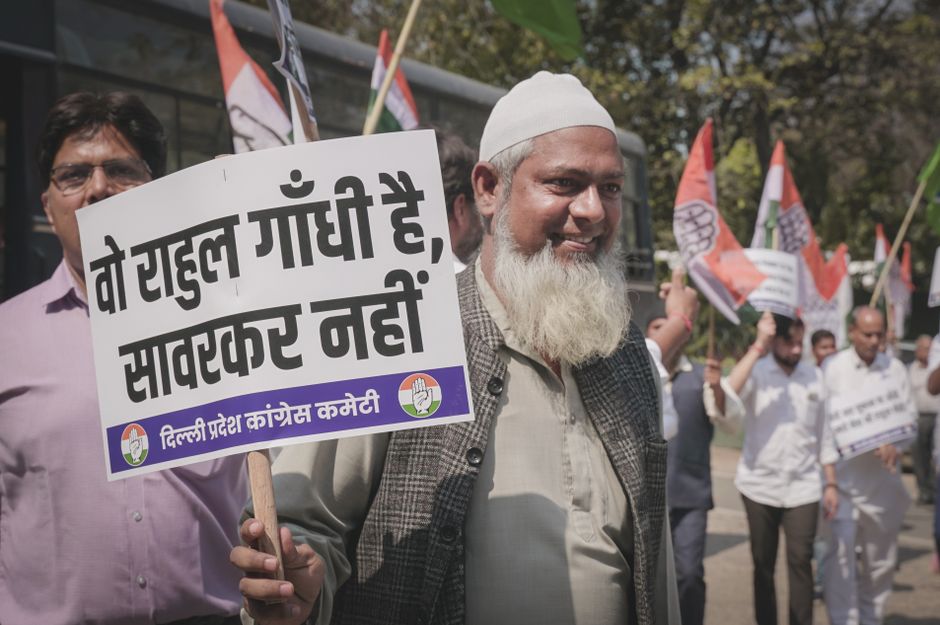
Protesters at Jantar Mantar

Jantar Mantar has become the epicenter for the CJP demonstrations.

What's Next: The Parliament March

The movement continues to draw support from farmers, civil society organizations, and students nationwide. The CJP has announced a peaceful march to Parliament scheduled for July 20, coinciding with the opening day of the Monsoon Session, to ensure their voices echo within the halls of the government.

Will the government yield to the demands of the students and activists? The nation watches closely as the fast continues.

Tadviruddha - Official Trailer

Tadviruddha - Official Trailer


from Entertainment - Videos - The Times of India https://ift.tt/qXQjZx7

M.R.P Neekentha Naakentha - Official Trailer

M.R.P Neekentha Naakentha - Official Trailer


from Entertainment - Videos - The Times of India https://ift.tt/iPAoDUd

Connor Murphy's Final Experiment Claimed His Life? Friends Claim He Injected Gold For 'Superpowers'

Connor Murphy's Final Experiment Claimed His Life? Friends Claim He Injected Gold For 'Superpowers'


from Entertainment - Videos - The Times of India https://ift.tt/wOpG9Vg

Friday, 10 July 2026

Vadamanjuviratu - Official Trailer​​​​​​​​​​​​​​​​​​​​​​​​​​​​​​​​​​​​​​​​​​​​​​​​​​​​​​​​​​​​​​​​​​​​​​​​​​​​​​​​​​​​​​​​​​​​​​​​​​​​​​​​​​​​​​​​​​​​​​​​​​​​​​​​​​​​​​​​​​​​​​​​​​​​​​​​​​​​​​​​​​​​​​​

Vadamanjuviratu - Official Trailer​​​​​​​​​​​​​​​​​​​​​​​​​​​​​​​​​​​​​​​​​​​​​​​​​​​​​​​​​​​​​​​​​​​​​​​​​​​​​​​​​​​​​​​​​​​​​​​​​​​​​​​​​​​​​​​​​​​​​​​​​​​​​​​​​​​​​​​​​​​​​​​​​​​​​​​​​​​​​​​​​​​​​​​


from Entertainment - Videos - The Times of India https://ift.tt/27Y9t6s

Bad Apples - Official Trailer​​​​​​​​​​​​​​​​​​​​​​​​​​​​​​​​​​​​​​​​​​​​​​​​​​​​​​​​​​​​​​​​​​​​​​​​​​​​​​​​​​​​​​​​​​​​​​​​​​​​​​​​​​​​​​​​​​​​​​​​​​​​​​​​​​​​​​​​​​​​​​​​​​​​​​​​​​​​​​​​​​​​​​​

Bad Apples - Official Trailer​​​​​​​​​​​​​​​​​​​​​​​​​​​​​​​​​​​​​​​​​​​​​​​​​​​​​​​​​​​​​​​​​​​​​​​​​​​​​​​​​​​​​​​​​​​​​​​​​​​​​​​​​​​​​​​​​​​​​​​​​​​​​​​​​​​​​​​​​​​​​​​​​​​​​​​​​​​​​​​​​​​​​​​


from Entertainment - Videos - The Times of India https://ift.tt/7CQzhSg

'The Daily Show' Mocks Mitch McConnell Health Mystery With 'Technically Dead' Joke

'The Daily Show' Mocks Mitch McConnell Health Mystery With 'Technically Dead' Joke


from Entertainment - Videos - The Times of India https://ift.tt/Ps4myUV

Thursday, 9 July 2026

A man with whom you might have very less pictures.

Free Work Anniversary Wish Generator | Share to WhatsApp

Create a Work Anniversary Wish 💼

Enter the details below to generate a shareable greeting!

Happy -Year Anniversary, ! 🎉

Share to WhatsApp 💬

Happy Marriage Anniversary

Create an Anniversary Wish 💍

Enter the couple's details to generate a beautiful, shareable greeting!

Happy Anniversary,
& ! 🥂

Share via WhatsApp 💬

Mutiny - Official Trailer

Mutiny - Official Trailer

Mutiny - Official Trailer

The Times of India | Entertainment Read More

Dune: Part Three - Official Trailer

Dune: Part Three - Official Trailer


from Entertainment - Videos - The Times of India https://ift.tt/stdn319

Lisa Rinna Sparks Backlash With Viral Mitch McConnell 'Weekend At Bernie's' Joke

Lisa Rinna Sparks Backlash With Viral Mitch McConnell 'Weekend At Bernie's' Joke


from Entertainment - Videos - The Times of India https://ift.tt/8AO5dti

Wednesday, 8 July 2026

Detailed Guide: JNVST Class 9 Lateral Entry Admission 2027-28

Complete Guide: JNVST Class 9 Lateral Entry Admission 2027-28

The Jawahar Navodaya Vidyalaya Selection Test (JNVST) is the official gateway for students seeking lateral entry into Class 9 in JNVs across India. If you are preparing for the upcoming 2027-28 academic session, here are all the essential details regarding dates, eligibility, and the exam structure.

🗓️ Important Dates to Remember

Keep track of these expected milestones for the 2027-28 admission cycle:

  • Registration Start Date: July 2026
  • Application Deadline: October 2026
  • Correction Window: Available until October 2026
  • Admit Card Release: January 2027
  • Selection Test Date: February 2027
  • Result Declaration: April 2027

🎓 Eligibility Criteria

To apply for the Class 9 lateral entry test, candidates must strictly meet the following conditions:

  • Academic Requirement: The student must be currently studying in Class 8 at the time of application.
  • Age Limit: The candidate's date of birth must fall between May 1, 2012, and July 31, 2014 (both dates inclusive).

📝 Exam Pattern & Syllabus

The selection test evaluates students based on the standard Class 8 syllabus. The exam paper covers four main sections:

English Hindi Mathematics Science

✅ Application and Post-Result Process

Applications will be processed entirely online through the official Navodaya Vidyalaya website. Once the results are declared in April 2027, students can check their scores by entering their roll number and date of birth in the official login portal.

Important Note on Verification: After the results are announced, parents of selected candidates must download the required forms from their specific school's website and submit them for rigorous document verification before the admission is officially finalized.

Swapnasundari - Official Trailer

Swapnasundari - Official Trailer


from Entertainment - Videos - The Times of India https://ift.tt/yqEfRnz

SIP Calculator

Estimate your mutual fund returns with an optional annual step-up.

Leave as 0 for a standard SIP.

Total Invested

₹0

Est. Returns

₹0

Total Value

₹0